

 By
By Investors have traditionally thought of gold as special. A lot of families consider it as a sign of safety, worth, and financial security. In the past, people mainly bought gold in the form of jewellery, coins, or bars. Things are a lot easier and smarter now. You may now receive gold without having to keep it at home or worry about how pure it is. That’s where gold exchange-traded funds come in. This post will show you how to invest in gold ETFs in a simple and useful method if you want to know how to do it. You don’t have to be an expert in finance to get started. You just need to know the basics, have a clear aim, and be disciplined.
What Is a Gold ETF?
A Gold ETF is a fund that tracks the price of physical gold. It is traded on the stock exchange just like a share. When you buy one unit, you are not physically holding metal in your hand, but you are investing in a fund that represents gold as an asset.
Most of these funds invest in high-purity physical gold and aim to reflect its market price, after accounting for small expenses. This gives investors an easy way to participate in gold price movements without buying jewellery or coins.
In simple words, it is a digital and market-linked way to own gold.
Why People Prefer Gold ETFs Today
Many people are moving toward this option because it solves several traditional problems associated with physical gold.
1. No storage tension When you buy jewellery or coins, you need a locker or a safe place to store them. With an ETF, there is no such burden.
2. No making charges. Jewellery comes with making charges, wastage, and design costs. A fund-based option avoids all of that.
3. Better transparency. The value is linked to live market prices, so there is more clarity in pricing.
4. Easy to buy and sell You can purchase and sell units through your trading account during market .
5. Useful for portfolio balance, Gold often behaves differently from equity. Because of this, many investors use it to diversify.
Why Gold Still Matters in a Portfolio Heading
Why Gold Is Still Important in a Portfolio People generally think of gold as a safe investment. It doesn’t usually go up quickly, but it can help keep things stable when other aspects of the market get shaky. A lot of investors migrate toward safer investments when things are unclear, and gold is one of those assets that often does well when that happens.
This doesn’t mean it should take the place of stocks, mutual funds, or bonds. It can instead be a support job. Putting all your money into one asset class is usually not as good as having a diversified portfolio. That’s why it’s helpful for both new and seasoned investors to learn how to invest in gold ETFs.
Who Should Consider Gold ETFs?
This option may suit you if:
- you want exposure to gold without buying physical items
- you are building a diversified portfolio
- you want a simple and liquid investment route
- you are investing for medium- or long-term financial stability
- you want to avoid purity and storage issues
It may not be ideal if you are expecting very high short-term returns or treating gold like a fast-growth asset. Gold usually plays a protective role rather than an aggressive wealth-creation role.
How a Gold ETF Works
Gold ETFs are like mutual funds or exchange-traded securities in that they may be bought and sold on the stock market like regular stocks. The underlying assets of a Gold ETF, on the other hand, are actual gold or gold futures contracts. The goal of the fund is to follow the price changes of gold.
This is how a Gold ETF works:
Gold futures ETF: Some Gold ETFs invest in gold futures contracts rather than holding physical gold. A gold futures contract is an agreement to buy or sell gold at a predetermined price at a future date. These ETFs aim to profit from the fluctuations in the price of gold futures, and their value is also influenced by the movements in gold prices.
Gold-backed ETF: In a Gold-backed ETF, the fund holds physical gold in a vault, often with a trusted custodian. The ETF’s value is based on the amount of gold it owns. Each share of the ETF represents a fraction of the gold held by the fund. The value of the shares rises or falls with the price of gold.
Gold ETFs usually trade on big stock exchanges like the New York Stock Exchange (NYSE) or the London Stock Exchange (LSE). This lets investors buy and sell shares all day long. Gold ETFs are a popular choice among investors since they are easy to get and trade.
This design enables the ETF keep a tight eye on gold prices, which it normally does. The score is 1 to 0. The difference is 5%. You can think of a gold ETF as owning gold in a digital form. You can’t get dividends from it, but you can make money when the price of gold goes up.
Requirements Before You Start
Before you begin, you need a few basic things in place.
Demat account
Since ETF units are held in electronic form, a demat account is necessary.
Trading account
You need a trading account linked with your broker to buy or sell units on the exchange.
Bank account
Your bank account should be linked for fund transfers.
Basic KYC completion
Identity and address verification are usually required for investment accounts.
Once these are ready, the process becomes straightforward.
How to Invest in Gold ETF in Steps
Let’s simplify the whole journey down into easy steps.
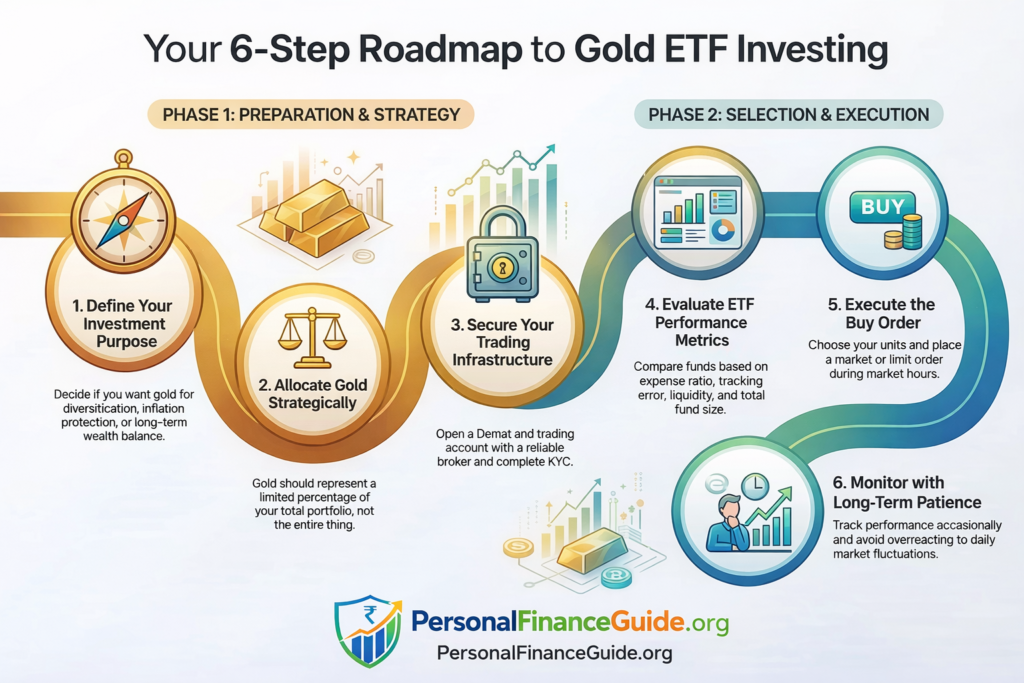
Step 1: Figure Out What You Want to Do
First, think about what you want to achieve with your investment in gold. Do you want to spread your risk, protect your wealth, beat inflation, or keep your balance over a long period of time? This helps you decide exactly how much you want to put into gold.
Step 2: Decide How to Divide Up Your Assets
You don’t want to put all your money into something without a plan. Gold is a good investment, but it’s not the only one you need to make. Depending on what you’re like, you might only want a small percentage of your total investments to be in gold.
Step 3: Create Your D-mat Account and Trading Account
You need to choose a good investment platform to work with, then complete the process of creating your account and filling out your KYC forms.
Step 4: Look for Gold ETFs that are Available
Once your account is set up, you can then look for the availability of the funds in the broker’s application or terminal. There are several options from different fund management companies.
Step 5: Carefully Compare the Funds
Don’t just pick one fund. Look at things such as the fund’s size, tracking error, expense ratio, and liquidity.
Step 6: Put in the order to buy
At this time during the day when the markets are open, choose the number of shares you want and then place your order. You can choose between a market order and a limit order.
Step 7: Keep an eye on things, but don’t go crazy.
After buying the stock, keep an eye on your allocation and performance over time. But do not worry every day about the price of gold. Be patient.
This is the best way for a retail investor to invest in gold ETFs.
Things to Check Before Choosing a Gold ETF
All funds are not equally efficient. Even though they follow the same asset, some differences matter.
Expense ratio
This is the annual cost charged by the fund. A lower expense ratio can help slightly improve long-term efficiency.
Tracking error
This measures how closely the fund follows the actual movement of gold prices. Lower tracking error is generally better.
Liquidity
A fund with better trading volume is easier to buy and sell without much price difference.
Assets under management
A larger fund may indicate stronger investor participation and smoother operations, though it should not be the only deciding factor.
Reputation of the fund house
A trusted fund house with a good operational track record can offer more comfort.
Best Time to Invest in Gold ETF
People often ask if there is a best time to invest. In actuality, it’s hard to get the timing of gold quite right. Prices change based on things like inflation predictions, interest rates, currency movement, and the mood of investors throughout the world.
Many investors would rather have a disciplined strategy than wait forever for the perfect entry point. They put money into their portfolios slowly or based on what their portfolios need, not by trying to guess what will happen next.
Consistency is frequently more important than exact timing if you want stability and variety.
Lump Sum or Gradual Buying?
Depending on your situation, either way could work.
Lump sum
This can work for you if you have extra cash and want to use it right away.
Buying slowly
This is helpful if you want to spread out your entry over time and lessen the emotional stress of scheduling.
For beginners, it sometimes feels better and easier to do things in little steps.
Common Mistakes to Avoid
People often make avoidable errors when entering this segment. Here are some of the most common ones.
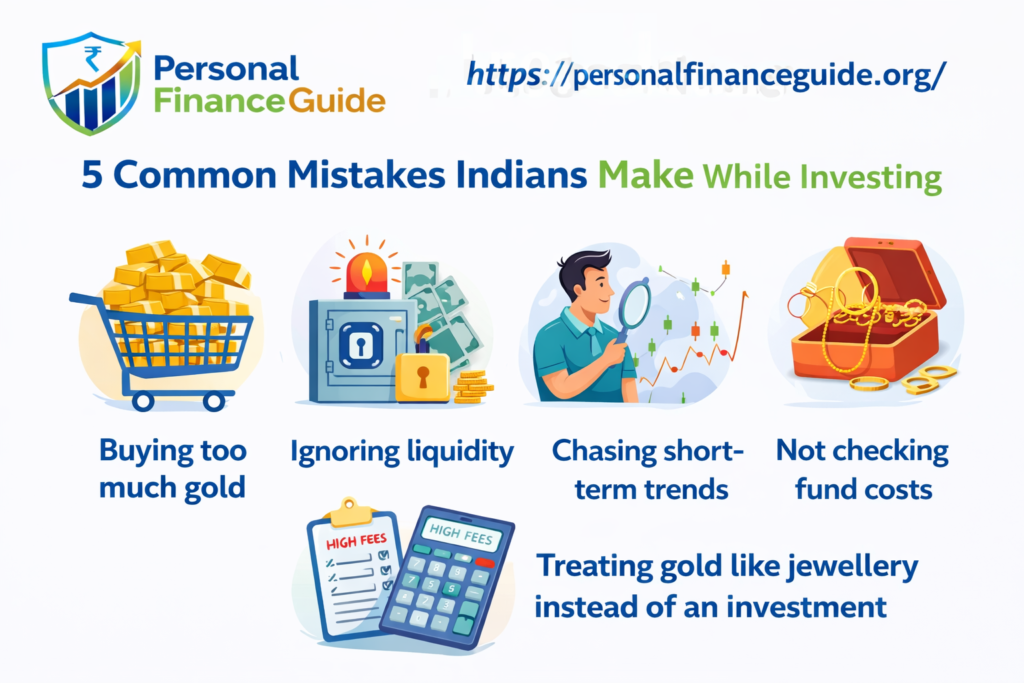
Buying too much
Gold is useful, but over-allocation can reduce growth potential if it replaces productive assets like equities for long periods.
Ignoring liquidity
Some funds may have low trading volume, which can affect ease of transactions.
Chasing short-term trends
Many people buy after sharp price increases because of fear of missing out. That is usually not a smart habit.
Not checking fund costs
Even small expenses matter over time.
Treating it like jewellery value
This is an investment product, not a decorative purchase. The mindset should be different.
Is Gold ETF Better Than Physical Gold?
This depends on what you want to do.
Physical gold has its place if you want jewelry for yourself, to give as a gift, or for cultural reasons. A market-linked fund is usually more useful if you want to make your investments work better.
There are problems with storing physical gold, the possibility of theft, worries about its purity, and deductions when you sell it. On the other hand, investing in ETFs is easy, clear, and liquid on the exchange.
So, for the sake of pure investment, a lot of individuals think that getting exposure through ETFs is better than buying coins or ornaments.
Gold ETF vs Gold Mutual Fund
These two are related but not the same.
A Gold ETF is bought and sold on the stock exchange through a demat and trading account. A gold mutual fund, on the other hand, can often be purchased directly through fund platforms without needing exchange trading in the same way.
If you already have a demat account and are comfortable buying through the market, ETFs can be a direct route. If you want a simpler mutual fund format, a gold fund may feel easier.
The core asset may be similar, but the access method is different.
Tax and Cost Awareness
It is always important to be aware that the return is not only dependent on the movement in the price before investing in the stock market. There may be some brokerage costs applicable for buying and selling the stocks, and the expense ratio applicable for the fund every year. In addition, there may be some tax implications as well, depending on the tax laws applicable in your country. It is always important to be aware that the tax laws can change any time, and it is always important to verify the applicable tax laws before making any decisions.
How much gold should you have in your investment portfolio?
There isn’t one answer that works for everyone. Your age, income stability, risk tolerance, and current assets will all affect how much you need. For other folks, a tiny amount is enough to diversify. If they want better defensive balance, some people may choose a slightly bigger piece. The most important thing is to be moderate. Gold can help protect your investments, but it shouldn’t be the main focus of any plan. Your portfolio should show both growth and stability.
The emotional benefits of buying gold through ETFs
One benefit that doesn’t get enough attention is peace of mind. A lot of individuals appreciate the concept of possessing gold, but they don’t like the problems that come with storing it, keeping it safe, and managing it. This choice takes away a lot of that worry.
You get a cleaner, more up-to-date way to invest. Everything stays in the digital world. It’s easy to keep track of records. It’s easier to buy and sell things. This is a big plus for a lot of investors.
Can beginners start with small things?
Yes, for sure. You don’t need a lot to get started. One of the best things about ETFs is how easy they are to get to. A newcomer can start with a tiny amount, learn how the market works, and slowly add more over time.
A lot of the time, it’s best to start small. It helps you feel less afraid, more confident, and more aware of how comfortable you are with changes in the market.
A lot of individuals think that this makes the path to investing in gold ETFs a lot less scary.
Practical Tips for First-Time Investors
Here are a few useful habits that can make your journey smoother:
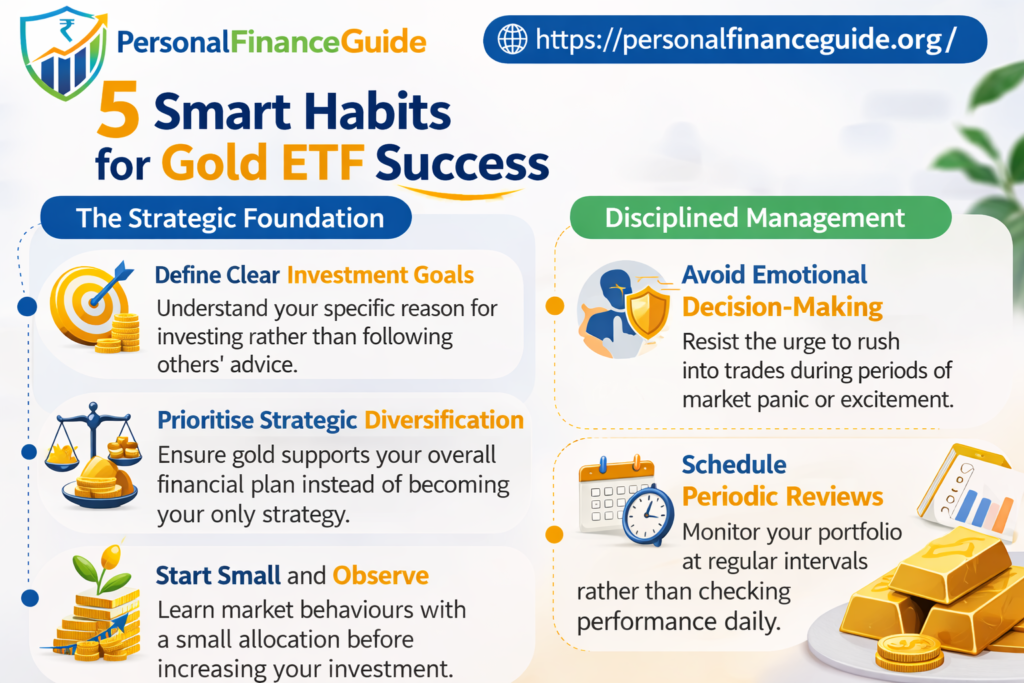
Keep your goal clear
Do not buy just because someone said gold is safe. Know why you are investing.
Review once in a while
You do not need to check daily. Periodic review is enough.
Avoid emotional decisions
Do not rush in during panic or excitement.
Stay diversified
Gold should support your financial plan, not become the only strategy.
Learn before increasing allocation
Start small, observe, and then decide your next move wisely.
Last Thoughts
It’s not hard to learn the basics of investing in gold ETFs, but as a matter of fact, investing in gold ETFs is one of the easiest ways to invest in gold without having to worry about the costs of investing in gold. This provides a cleaner, more flexible, and easier approach to investing, especially for modern investors.
However, you need to know that investing in gold, as a matter of fact, needs to be done in a smart manner, meaning that you need to invest in gold as a secondary investment, not as a primary investment, as this provides a balanced approach to investing, as a balanced approach allows you to feel better, more relaxed, and provides a sense of security, but you need to make this investment with clarity, not excitement, as you do with any other investment.
As a matter of fact, if you are new to something, you need to start with the basics, meaning that you need to open the right accounts, choose the right funds, invest with a goal, and don’t overcommit, as taking small, smart steps forward helps you build more confidence over time.
The end result is that successful investing is not about pursuing what sounds good. Rather, it is about investing in what works best with your money. Gold ETFs can be an important part of the process when they are used in the right way.