

 By
By What is Gold ETF
In today’s unstable banking world, investors are always looking for secure assets that can protect them from inflation and market crashes. People still turn to gold as a safe place to keep their money. But affairs, concrete gold restricted, or beautification come with headaches and anxiety about not being able to get enough. The avant-garde answer is gold ETFs. You’re at the proper place if you’re not sure what a gold ETF is. This video goes into great detail about what a gold ETF is, how it works, and why it might be the best move you can do right now.
Gold ETFs have become very popular, especially in places like India where gold has cultural and economic importance. They are traded on boring exchanges like stocks, and they have a level of movement and wealth that real gold can’t match. By the end of this article, you’ll know exactly what a gold ETF is and if it’s a good fit for your portfolio.
Defining What Is Gold ETF: The Basics
So, what is gold ETF in its simplest form? Well, what is gold ETF? A Gold Exchange Traded Fund, or ETF, is an investment fund traded on the stock market and listed like stocks. It tracks the price of gold, holding gold bullion or gold futures in vaults and issuing shares that represent ownership of gold. If you own shares of gold ETFs, you own gold without actually touching it.”
Unlike mutual funds, gold ETFs are traded during the course of the day. “Unlike traditional mutual fund shares, ETF shares trade throughout the day, so if gold prices go up by 5 percent at 10 AM, you can sell your shares right then and there. You can choose from ETFs like the SPDR Gold Shares (GLD) in the US or the Nippon India ETF Gold BeES in India. So, what is gold ETF? Well, gold ETFs are simply gold in the form of stocks.”
Governing bodies like SEBI in India or the SEC in the US oversee the funds. This makes their operations clear. The ETF’s value follows current gold prices. A small fee, usually 0.4% to 1%, is subtracted. You only need to buy one share to invest. This suits new investors wondering about gold ETFs and how to begin.
How does a gold ETF work? Step-by-Step Breakdown
Gold ETFs are like mutual funds or exchange-traded securities in that they may be bought and sold on the stock market like regular stocks. The underlying assets of a Gold ETF, on the other hand, are actual gold or gold futures contracts. The goal of the fund is to follow the price changes of gold.
This is how a Gold ETF works:
Gold futures ETF: Some Gold ETFs invest in gold futures contracts rather than holding physical gold. A gold futures contract is an agreement to buy or sell gold at a predetermined price at a future date. These ETFs aim to profit from the fluctuations in the price of gold futures, and their value is also influenced by the movements in gold prices.
Gold-backed ETF: In a Gold-backed ETF, the fund holds physical gold in a vault, often with a trusted custodian. The ETF’s value is based on the amount of gold it owns. Each share of the ETF represents a fraction of the gold held by the fund. The value of the shares rises or falls with the price of gold.
Gold ETFs usually trade on big stock exchanges like the New York Stock Exchange (NYSE) or the London Stock Exchange (LSE). This lets investors buy and sell shares all day long. Gold ETFs are a popular choice among investors since they are easy to get and trade.
This design enables the ETF keep a tight eye on gold prices, which it normally does. The score is 1 to 0. The difference is 5%. You can think of a gold ETF as owning gold in a digital form. You can’t get dividends from it, but you can make money when the price of gold goes up.
Types of Gold ETFs: Which One Fits You?
Which Type of Gold ETF Is Right for You?
Investors can choose from two primary types of Gold ETFs:
- ETFs for Physical Gold
actual Gold ETFs put money directly into actual gold bullion and keep it safe in vaults. These funds usually try to closely track the spot price of gold, which is the price that gold is currently selling for.
For instance, each share of a Gold ETF like the SPDR Gold Trust (GLD) stands for a set amount of gold, usually less than an ounce. The fund keeps its gold in safe vaults, and investors can own gold indirectly through their ETF shares. These funds are mostly for people who want to make money from changes in the price of gold without having to deal with the hassle of buying and keeping gold themselves. - ETFs for Gold Futures
Gold futures ETFs buy and sell gold futures contracts, which are agreements to buy or sell gold at a specified price on a certain date in the future. These ETFs don’t own real gold; instead, they invest in contracts that show what the price of gold will be in the future. The purpose of these ETFs is to make money by betting on changes in the price of gold futures.
Gold futures ETFs are riskier than actual Gold ETFs and can be affected by more than just the price of gold. The futures market’s supply and demand, contract expiration dates, and rollovers are some of these things.
Gold ETFs can be quite different from one another. Knowing the different types of gold ETFs makes it easier to choose the right one.
- Physically Backed Gold ETFs hold real gold bars. For example, GLD or HDFC Gold ETF are options to consider. The most basic and common form.
- Gold Mining ETFs let you follow the stocks of gold mining companies such as Newmont or Barrick Gold. For example, this means it’s a riskier bet with the chance for bigger gains, but it’s not just a straightforward gold investment.
- Futures-Based Gold ETFs work by using gold futures contracts to track the price of gold. Instead of holding physical gold, these ETFs buy futures contracts that agree to buy or sell gold at a set price on a future date. This way, investors can get exposure to gold’s price movements without dealing with the hassle of storing actual gold.
- Leveraged and Inverse Gold ETFs can boost both your gains and losses.g.2 times gold or minus 1 times gold. This is meant for traders, not for people who hold on for the long run.
In India, physically backed ones are the most common because of the regulations. If gold ETFs mean stability to you, it’s better to stick with the physical ones.
What Is Gold ETF’s Edge Over Physical Gold?
While physical gold is desirable for events like weddings or urgent needs, Gold ETFs offer superior convenience. The following is a brief comparison:
| Feature | Gold ETF | Physical Gold |
| Storage | None—vaulted by fund | Safe/vault needed (costs 1-2%/yr) |
| Liquidity | Sell anytime during market hours | Days/weeks to sell |
| Purity | 99.5% assured | Risk of fakes |
| Costs | 0.5-1% expense ratio | Making charges (5-20%) + GST |
| Taxes (India) | LTCG 12.5% after 1 yr | 3% GST + 20% STCG |
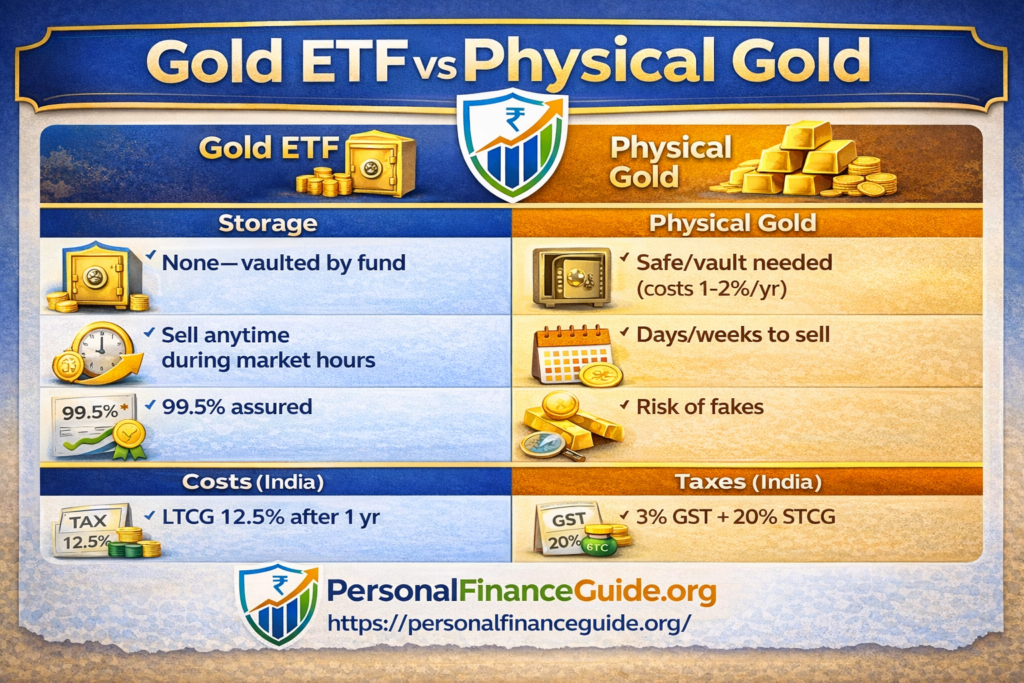
Clearly, what is gold ETF offers solves pain points. No locker rent, no weighing scales, just app trades. During 2020’s COVID crash, gold ETFs outperformed physical sales by 10-15% due to instant liquidity.
Benefits of Investing in Gold ETFs
Gold ETFs action several advantages over acceptable methods of advance in gold. Here are some of the key benefits:
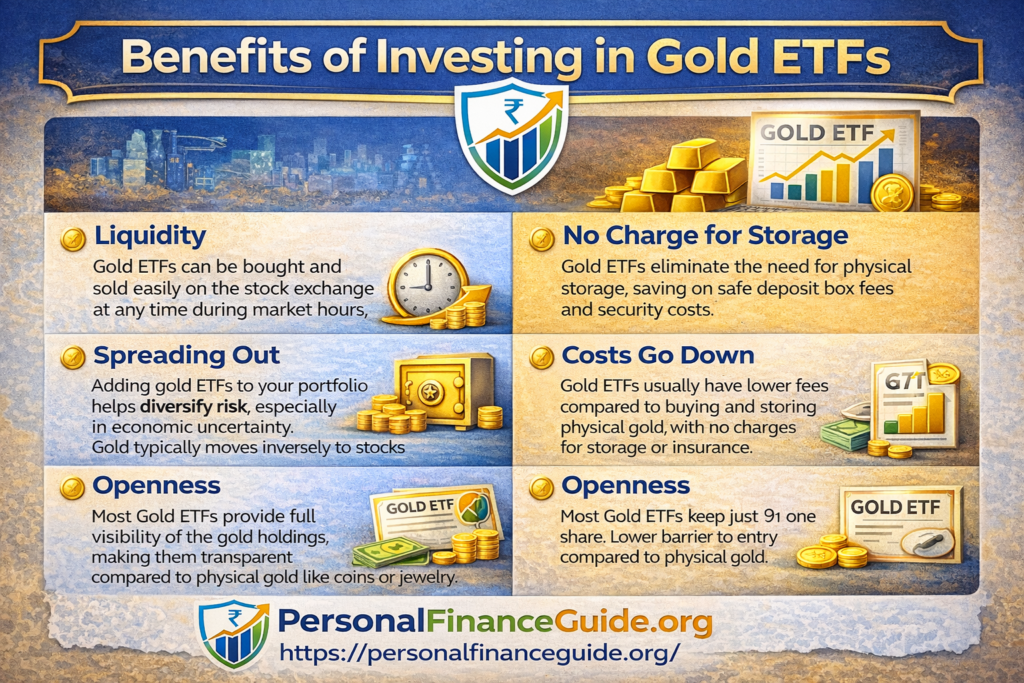
- Liquidity
Gold ETFs can be bought and awash calmly on the banal exchange, which gives investors liquidity. Unlike concrete gold, which may charge to be awash in being or through a dealer, Gold ETFs can be traded like approved stocks at any time during bazaar hours. This makes them a acceptable and adjustable advance option. - No Charge for Storage
One of the best cogent advantages of Gold ETFs is that they annihilate the charge for concrete storage. When you buy concrete gold, you charge to abundance it safely, which generally involves advantageous for a safe drop box or added accumulator solutions. With Gold ETFs, there is no charge to anguish about accumulator or security, as the gold is captivated by the fund’s babysitter in a defended location. - Spreading out
People have always thought of gold as a way to protect themselves from inflation and market swings. Adding gold to your investment portfolio can help spread out your risk, especially when the economy is uncertain. Gold ETFs make it easy to add gold to your portfolio without having to deal with the problems that come with owning physical gold. Gold and stocks don’t have much of a connection (0.1–0.3), which makes equity-heavy portfolios more stable. In the boring rout of 2022, gold went up 8% and Nifty went down 12%. - Costs go down
Gold ETFs are a lot cheaper than buying and storing real gold. When you buy gold coins or bars, you have to pay more than the spot price and pay for storage and insurance. Gold ETFs, on the other hand, usually have lower fees and don’t charge for buying, storing, or insuring real gold. - Openness
Most Gold ETFs keep investors up to date on the gold they own in their funds. Investors can see how much gold the fund has and check its value. On the other hand, owning physical gold, like coins or jewelry, can make it harder to see how much it is worth on the market right now. - No Minimum Investment Needed
Investors can buy small amounts of shares in gold ETFs, which makes them available to a wide range of people. You may need to buy an entire coin or bar of physical gold, but you can invest in Gold ETFs with just one share. This can be cheaper for new investors.
Risks of Investing in Gold ETFs
Gold ETFs provide some benefits, but they also come with some risks:
- Risk in the Market
There is a risk in the market for gold ETFs. Their value changes with the price of gold, which is affected by the state of the world economy, geopolitical tensions, interest rates, and changes in currency. When the price of gold goes down, the ETF’s value goes down as well. - Risk of the other party
If the other party in a futures contract defaults, gold futures ETFs are at danger. Gold ETFs that hold physical gold are less risky because the gold is kept by a reputable custodian. - Error in tracking
There is something called tracking error that means gold ETFs may not always follow gold prices properly. This might happen because of management fees, operational costs, or the fund’s investing strategy, which can make the ETF do worse or better than gold. - Risk of currency
When you buy Gold ETFs that are traded in other currencies, you are taking on currency risk. For instance, if the ETF is in US dollars but you buy it from another nation, fluctuations in the exchange rate could influence how much money you make.
How to Invest in Gold ETFs?
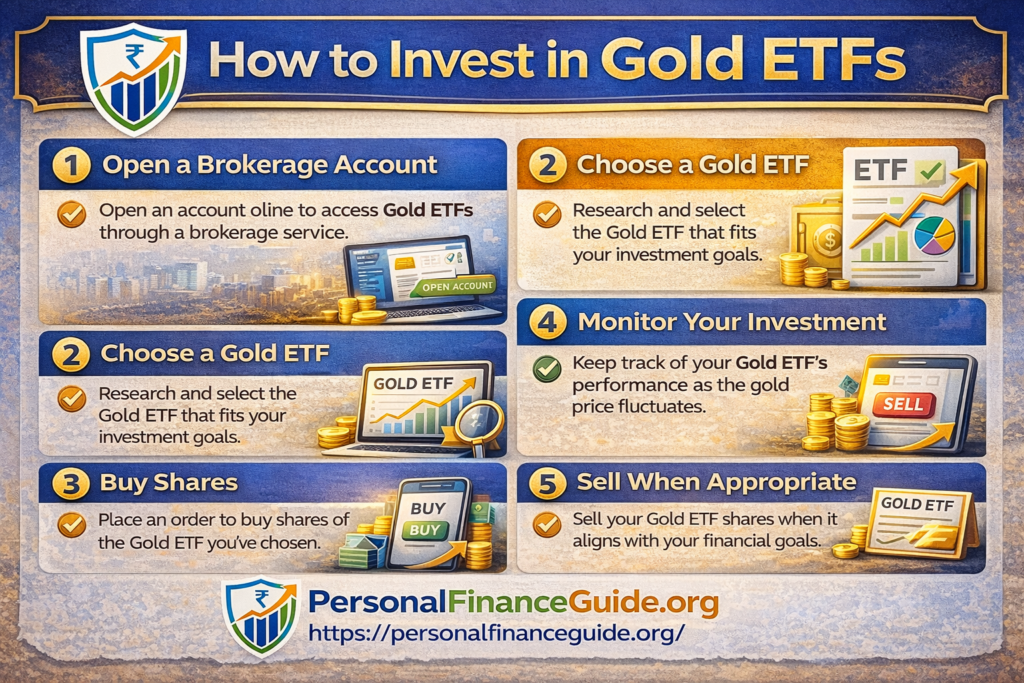
You can easily invest in Gold ETFs using a brokerage account. Follow these steps to invest in Gold ETFs. Get a Brokerage Account. You will need to create a brokerage account with a bank or other financial institution that lets you trade ETFs in order to invest in Gold ETFs. A lot of internet brokers let you trade ETFs for cheap fees.
Pick a Gold ETF: Look into numerous Gold ETFs and pick one that meets your investment needs. Consider things like the kind of gold backing (real gold or futures contracts), management costs, liquidity, and past performance.
Buy Stocks: You can buy shares when you pick your Gold ETF. You can buy as many or as few shares as you like, depending on how much the ETF is worth right now.
Keep an eye on your investment: It’s crucial to keep an eye on how your Gold ETF is doing after you buy it, especially since the price of gold might change for a number of reasons. You can keep an eye on your investment through your brokerage platform or financial news sites.
When it’s right to sell: You can sell your Gold ETF shares and make or lose money when you think the moment is right or when your investing goals are accomplished.
Conclusion
Gold ETFs provide an easy and convenient way for investors to gain exposure to gold without the challenges of purchasing and storing physical gold. Whether you’re looking for a hedge against inflation, diversification, or simply a way to capitalize on gold price movements, Gold ETFs offer liquidity, transparency, and lower costs compared to traditional gold investments. However, like all investments, they come with risks, and it’s important to carefully evaluate the fund’s structure and market conditions before investing.
By understanding the types, benefits, and risks of Gold ETFs, investors can make more informed decisions about incorporating gold into their portfolios. Whether you’re a seasoned investor or a newcomer, Gold ETFs provide a flexible and accessible way to participate in the gold market.
14 Comments